From Imperial Insignia to Victorian Accessory: The Transcultural Journey of Qing Rank Badges
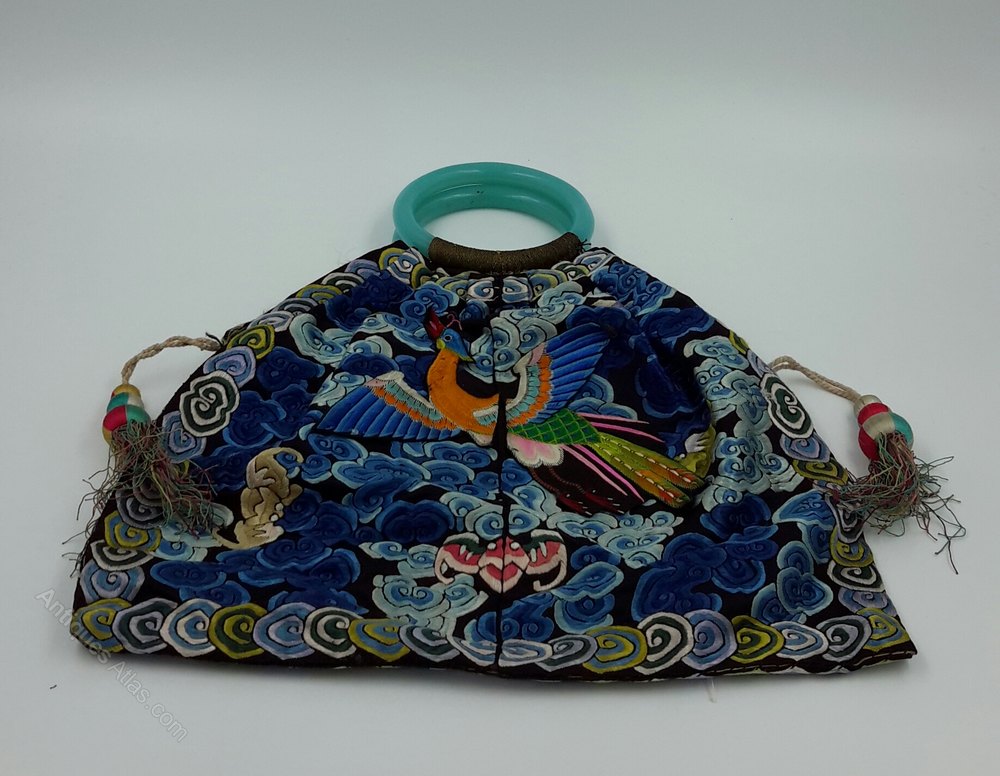
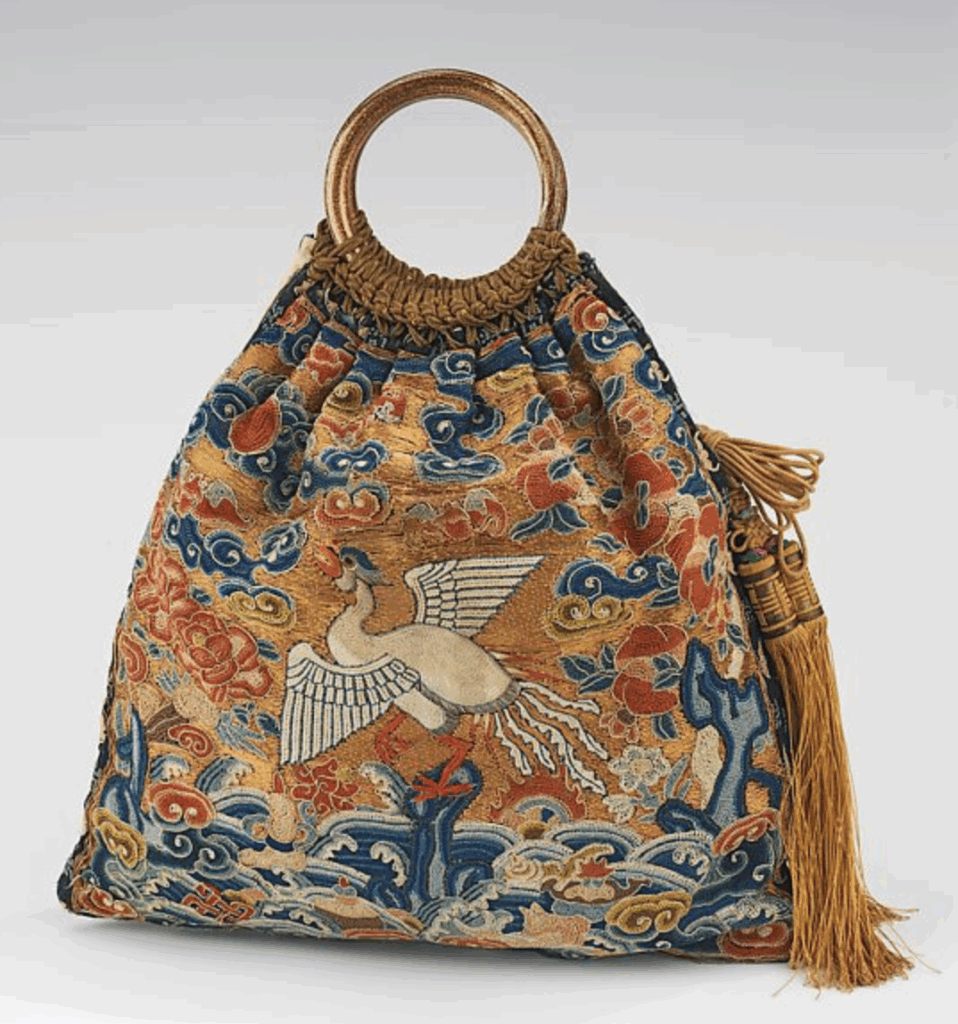
The Purse Museum’s Qing Dynasty (1636-1912) rank badge exemplifies a significant case of transcultural adaptation of imperial insignia. Originally fabricated as a buzi (补子) between approximately 1750-1850, this silk embroidery panel was executed using the kesi tapestry technique with gold-wrapped silk threads. As stipulated in the 1759 Huangchao liqi tushi (《皇朝礼器图式》), the badge’s specific zoomorphic motif—whether crane (denoting civil officials) or qilin (indicating military ranks)—precisely designated the wearer’s position within the Qing bureaucratic hierarchy.
The artifact’s conversion into a purse occurred during the height of Anglo-Chinese trade relations following the First Opium War (1839-1842) and subsequent to the Second Opium War (1856-1860) and Treaty of Tientsin (1858). British silversmiths, primarily from Birmingham’s jewelry quarter, mounted these appropriated insignia in sterling silver frames adorned with intricate Old Testament scenes. These biblical depictions were rendered in high relief through die-stamping techniques characteristic of Victorian-era silverwork (1850-1900). The incorporation of a chatelaine clasp—a functional accessory that achieved peak popularity between 1860-1890, originally developed as a practical belt hook for domestic implements—modified both the purse’s utility and social significance. This modification converted the formerly planar badge into a three-dimensional wearable accessory that accommodated Victorian feminine fashion while preserving its exotic allure. The chatelaine’s inclusion demonstrates the purse’s design intention for conspicuous display as part of women’s quotidian attire, functioning simultaneously as a status marker and practical receptacle for personal effects.
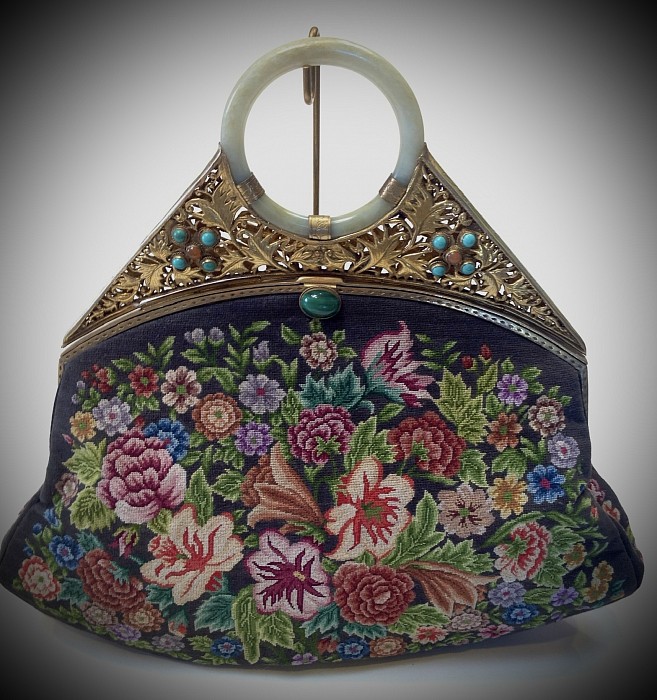
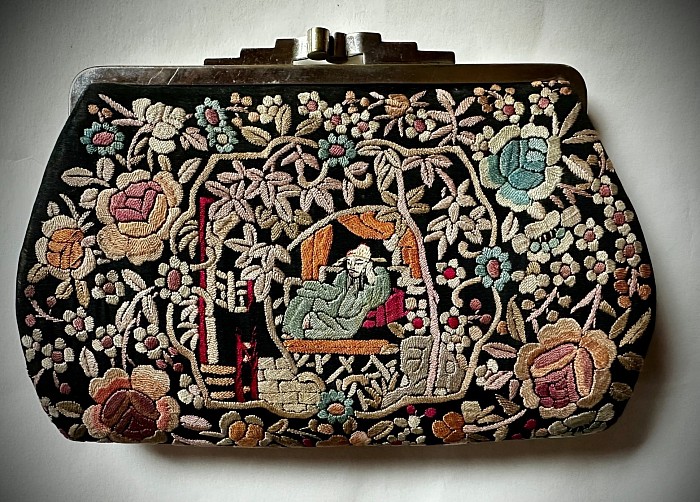
A noteworthy parallel exists within the Purse Museum’s holdings of Chinese Export Petit Point Purses (1905-1935). Commercial enterprises such as the Red Guard Company (established Shanghai, 1898) produced these specifically for Western markets, as substantiated by their documentation in Saks Fifth Avenue catalogs (particularly the 1924-1927 editions).
These two artifact groups in the Purse Museum’s collection—the repurposed Qing rank badge and commercial export purses—comprehensively chronicle the evolution of East-West artistic interchange from spontaneous colonial-era appropriation to intentional twentieth-century commercialization. The rank badge’s metamorphosis (1870-1890) illustrates how Victorian artisans reinterpreted Chinese imperial iconography through Western aesthetic frameworks, while the export purses (1905-1935) exemplify Chinese craftsmen’s calculated adaptation to foreign market demands.