Links between the Mask of Agamemnon and the Chinese bronze ding vessel
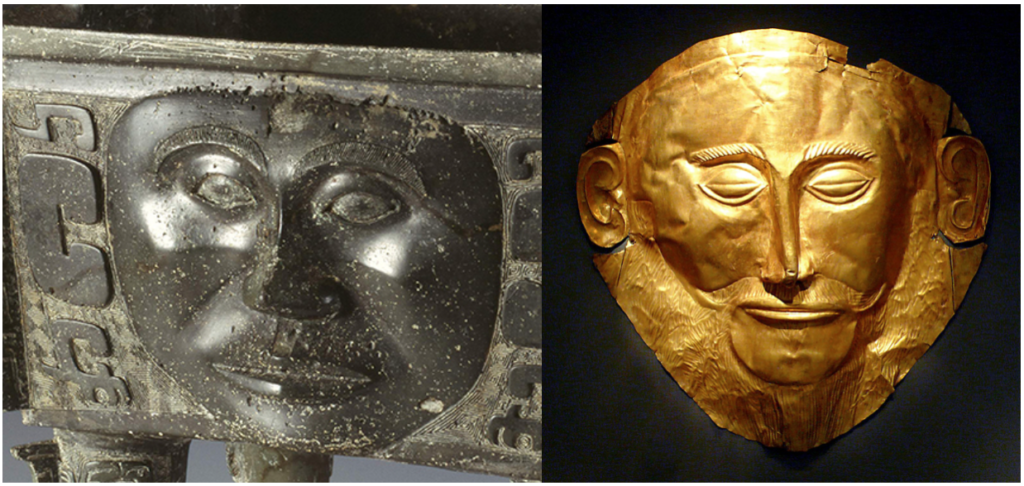
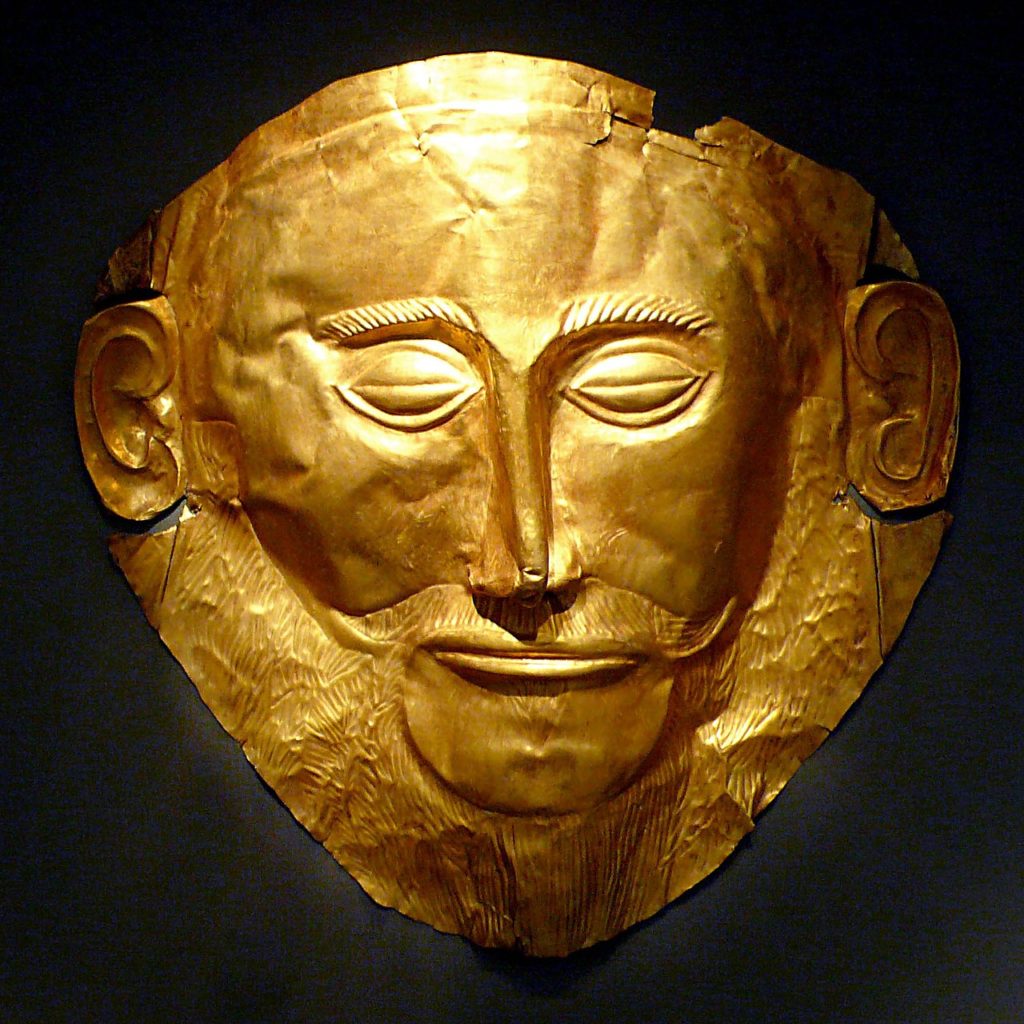
This is the Mask of Agamemnon (中文:阿迦门农面具,迈锡尼) – a gold funeral mask (16th century BCE) discovered at the ancient Greek site of Mycenae. The mask, displayed in the National Archaeological Museum of Athens, has been described by Cathy Gere as the “Mona Lisa of prehistory”. It is found in Tomb V in Mycenae by Heinrich Schliemann in 1876.
The mask depicts the imposing face of a bearded nobleman. It is made of a gold sheet with repoussé details. Two holes near the ears indicate that the mask was held in a place of the deceased’s face with twine. The authenticity of the mask has been formally questioned due to the high level of detail, such as the beard and ears. No other mask of its type has a similar amount of detail.
The bronze square ding vessel (鼎), conveying the idea of a combination of kingship and theocracy (Shang Dynasty, c.16th century-11th century BCE), that is currently being exhibited at the Hunan Museum, China, is covered with either a human face or a mask (supposedly the funeral mask) instead of the usual abstract taotie (饕餮) decorations. Interestingly enough the Mask of Agamemnon and the face- pattern on the Chinese vessel share common features in terms of form and shape.
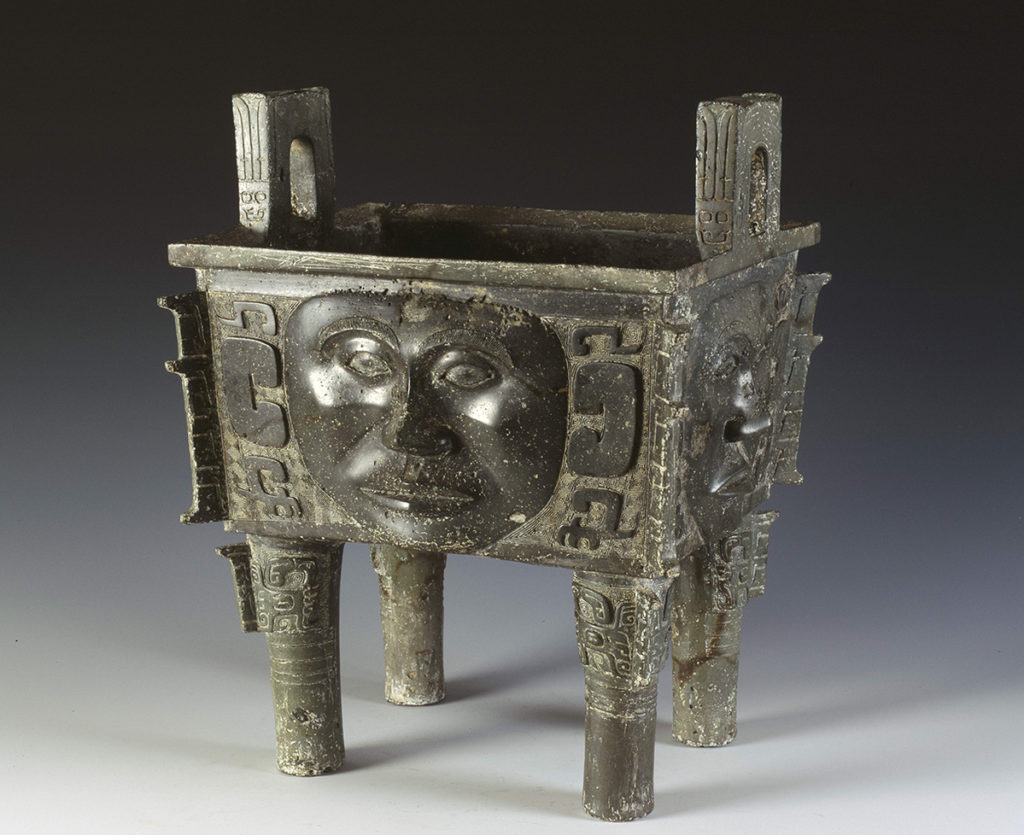
It is noteworthy that ding vessels (鼎) – prehistoric and ancient Chinese cauldrons, standing upon legs with a lid and two facing handles, are considered one of the most iconic shapes employed in Chinese ritual bronzes, having been used for cooking, storage, and ritual offerings to the gods or to ancestors. Ding vessels are known from the Bronze Age, particularly after the Zhou dynasty deemphasized the ritual use of wine practiced by the Shang kings. Under the Zhou, the ding and the privilege to perform the associated rituals turned into symbols of power and authority.
Although the discussed artifacts represent two different cultures, both of them have a funerary function, due to their material/medium and original context being also linked with the dominant notions of the ancient civilizations- supremacy, burial rituals, and ancestral worship.